Showing posts with label Kickstarter. Show all posts
Showing posts with label Kickstarter. Show all posts
Thursday, July 24, 2014
Desdemona Metus graphic novel from DieGo Comics Publishing
The people from DieGo Comics Publishing announce a brand new kickstarter project for their graphic novel Desdemona Metus. Check it out!

Wednesday, May 28, 2014
In Search of Captain Crown: Interview with Tristan Roulot & Patrick Hénaff
Early this year CBNAH caught up with writer and artist duo of Tristan Roulot and Patrick Hénaff to talk about their two part book series The Will of Captain Crown, which was first published in France and successfully funded on Kickstarter for an English version of the comic. Both men are from France and are now currently living in Montreal, Quebec, Canada. Captain Crown is something unique, it's a hard boiled pirate crime story about the death of Captain Alexander Crown and his will. His chief officer, Red is entrusted to reunite the five children of Captain Crown. In this interview, they talk about the comic, using Kickstarter, living in Montreal and much more!

CBNAH: First off, how do you feel with the Kickstarter project in the last stage of sending out the rewards to the backers?
Patrick Hénaff: Well, we're pretty excited because we've been working on that for a few months now. Going through the campaign, it was very successful and sending out the final product, the book.
Tristan Roulot: That for us was our final sprint. The book is printed. We received it and are very content with the printing, the printer did a very well job, all that is left are the displays, the prints and little bonuses we promised to print. It is an end of a lengthy process.

CBNAH: Can you tell us the genesis of Captain Crown?
PH: It all started (it was the book in French) with me meeting Tristan. He had this story, he worked on the story long time ago, and tried it with another artist and never went through. When I moved into my own studio, I met with Tristan there and after awhile we wanted to do something together. He has this story with pirates that he told me about. We started to do a few pages and we sent that to the French publisher. The publisher was probably looking for that type of story. We signed the contract with them, very fast, and we started to work on the book right away.
TR: It was nice, I had arrived in Montreal, it had been five or six years, I went to a studio where Patrick and other comic book authors were at, and so Patrick and I, we thought about doing a project together, and for me being in North America, I had to do projects rather than comics, so I started proposing a story about Spider-Man, and, so one drunken night he asked why I proposed Spider-Man related things. He said, "I'm a Breton, my interests are boats, the sea, etc." And, well, there it was, a story of pirates was hatched, to which I replied "Sure". I had that story sitting inside my boxes for a very long time and so we went for it right after that evening. (laughs).
CBNAH: For those who didn't back the Kickstarter for the comic, what's the story of the comic?
PH: The story it's a little bit of a crime story set in a pirate environment. It's about an old sailor, an old pirate-- a legendary captain in the Caribbean. Who's killed and his second in command need to find all of the captain's children in order to give them the inheritance. Also, he has to unmask one of the children as the murderer of the father. He knows it's one of the children but doesn't know who. He has this double task to do in the comic.
CBNAH: Growing up were you either a big fan of Tintin or Spirou magazine?
PH: A little bit of both. I had a lot of them. My father used to collect them, so I had piles of both of those magazines. I also read those old style European, Belgium comic books and I learn to draw from them. And I was reading a lot of American comic books that were available in France at that time. But I had piles of Spirou at home, like the old ones from the 60s and 70s.
TR: I discovered Tintin when I was 16-17 years of age. My father bought a lot of comics, and that's what I read instead of magazines, there were tons of comics, piles and piles of them. I rather Tintin than Spirou, when it comes down to reading Tintin remains immortal.
CBNAH: What was your favorite strip from each magazine?
PH: Favorite one? They were a lot of great titles from both magazines. I used to like Gil Jordan. A lot of those titles are totally forgotten now. Too different kind of art that I do now, things like that I appreciate still.
TR: Something I read at the time and still read with great pleasure is Thorgal. Anything writer Jean Van Hamme does, I'm big fan of his work.

CBNAH: Who were your main influences growing up?
PH: Pretty much all the great talents that worked for both magazines.
TR:I had told you about Jean Van Hamme. He's a big influence because he is the best in France in terms of scenario, in technical scenario, meaning the narration is very precise, very condensed. He knows everything. The dialogues are complete, nothing gets disposed, it's perfection. So, Van Hamme, or else I'd say Alan Moore, he has a philosophical and social dimension. Alan Moore is in my opinion number one, and has been for a long time.
CBNAH: How's life living in Montreal compare to France?
PH: It's strange because I didn't do the transition from France to Montreal. I used to live in Alberta for about six years and then moved from Alberta to Montreal. So the transition was from the west of Canada to the east of Canada. I had my cultural shock while living in Alberta, and it wasn't all that different here(Montreal). I never been an artist in France, so I have no idea what's it like to be a comic artist in France.
TR: For me, it's very different because I had done a tour of Quebec, and I had plans of moving from France. I arrived in Montreal and found it absolutely incredible, the type of mix between the American and French culture, the people of Quebec have a really interesting culture, as well as a very interesting energy, an energy we may not have enough of in France. However, what hasn't changed for my career is that the culture in France is subsidized, which means that every single festival takes tremendous care of the authors, they go to big restaurants, big hotels, etc every weekend. They visit the castles! Here, on the contrary, during the Comiccons, the authors pay for their tables, they are the traders of their work. That's a big difference, in comparing the statuses of authors and artisan author...The kind of mix where you have to sell your production. It's very different.

CBNAH: Were there any doubts for starting a Kickstarter for Captain Crown?
PH: Yes, there were a lot of doubts of doing the Kickstarter at every stage. We did the Kickstarter campaign if there was some sort of interest for this type of title. We weren't sure at all if anyone wanted to fund this comic. Once we reached our stretch goal, our next thought was how to present a good looking book.
TR: The campaign was a real roller coaster. It did not stop from the beginning. You see the first 100$, 200$, 300$. We got up to 1000$ and still needed to gain 6000$. You tell yourself that you'll never make it and that there's only 30 days left. At the end of day 8 or 10 we had practically arrived at 5000$ or 7000$, and, once again, you tell yourself "Ouf, it's happening." and it continues. And, it happened again at day 10 or 12, and, reaching the three last days it was at around 15 000$. There's something extreme towards the end, you are immensely psychologically exhausted, it's that intense. It requires a ton of work, to question and ask what we have to put as a new objective for the campaign, to keep things rolling and active, and what we would do differently, but overall it is amazing. For me, it's completely unexpected. We didn't know what was going to happen.
CBNAH: Will you do a Kickstarter for any of your previous works?
PH: Well, we're going to do a Kickstarter for the second volume of Captain Crown in the same exact model. We're hoping to be as successful as the first one. Going to plan that campaign around spring or in the summer. Also, we already kept the rights for North America on our current three book series called Hedge Fund, which deals with banks and the financial crisis of 2008. And by contact we kept all of the rights so we can do the same thing like Captain Crown. But for the future that's the plan to keep on doing this.
TR: Well, indeed, it is true that Kickstarter reaching the American continent is an absolutely amazing solution for us Europeans. Effectively, we have our public in Europe, and yes, the news for a new series is accurate, now that we can negotiate the contracts - we keep the American rights, as well as our chances, and introduce our work...Kickstarter is very interesting...I see no other way to commence it for the moment because we're not only talking about translation, we're talking about completely reformatting the album into a comic, it takes a lot of time, it needs funding...We cannot do it on our own, we need funding!
CBNAH: Has any North American publishers got in contact with you to publish Captain Crown?
PH: No, not yet. But once we got the two books, we're definitely going to send it out to all of the different publishers to see if there's an interest. Maybe or maybe there will be and if not the book still exists.
TR: We went...In its inception, actually, when we imagined doing this translation, we had gone to check out Comiccon in New York to see if there was a possible interest and well we spoke to them about a story of pirates in theme of an Agatha Christie crime story and they asked if there were any zombies in our pirate story, so we very quickly noticed that they were a little skeptical in comparison to European productions, we had mentioned that the story had a historical background and it frightened them, they were maybe scared it would be a little boring, that is why we started Kickstarter. What is certain is that the books made by Kickstarter can't be found anywhere else, even if we go to another editor where we will consider a do-format graphic novel compiling the two books into one, but the object book offered by Kickstarter's backers will however be a specific kind.
CBNAH: Any upcoming Con appearances?
PH: We're going to do that. First one will be at the one in Montreal in the fall. We're going to contact someone from the con to see if we can get a table there.
TR: Yes, it's going to be really interesting to meet and get feedback from our readers. There will definitely be a return. We sent Captain Crown's PDF about a month and a half ago and we already have very pleasant replies, but it will be interesting to see once people have the physical copy of the book in hand.
CBNAH: Where you do see yourselves in three to five years from now?
PH: That's a very good question. I would like to have the answer for that (laughs). We're working on Hedge Fund at the moment and it's going to be done around 2015. And after that, I'm going to be unemployed (laughs).
TR: I heard about a reward. I don't know, it interests me (laughs).

Special Thanks to Lori T. for helping out on this interview.
Thursday, March 20, 2014
Path into the Darkest Dungeon: Interview with Chris Bourassa
Darkest Dungeon is a brand new gothic roguelike RPG game coming out in January 2015 from Red Hook Studios. The game was successful funded on Kickstarter and reached its goal of $75,000 in a day and in total over $313,000. The game is both dark and scary, and something that horror and RPG fans will love. One of the main features of the game is "The Affliction System," in which the characters in your party can feel extreme amount of stress and pressure when encountering the different horrors in the dungeons. Certain characters in your party will develop stress, phobias, other emotional baggage. Making it a unique gaming experience for the player. A few weeks ago, CBNAH staff writer Panagiotis Drakopoulos spoke with Chris Bourassa, the creative director and artist of Darkest Dungeon. To talk about the game, combat system, Kickstarter and many more.
CBNAH: First off, how did Red Hook Studios started off?
Chris Bourassa: Well, it's a partnership. Red Hook Studios is basically a partnership between Tyler Sigman and myself. We worked together at Backbone Entertainment in Vancouver, about six or seven years ago and we hit it off and became friends. We always sort of tried to think of ways that we could team up because we felt like we had complementary skill sets. We both had different jobs for number of years and the timing just didn't really work out. When things kind of click, we decided to really take a shot at doing a indie game together and that's how we formed the company
CBNAH: You worked on the Max Steel series as an art director. Can you tell us you experience as an art director or working in animation?
CB: So, I art directed the first season of the Nerdcorps reboot of Max Steel. It was a lot fun and intense amount of work. Very different from video games. I thought it would be cool after I spent ten years working in games as a concept artist and art director to try some TV to get a sense how things were different. It was a real learning experience and the deadlines are a lot tighter in broadcast television, the budgets are little tighter, but you learn how to get creative and you kind of sometimes turn some of those weaknesses into strengths. It was really a fun ride and I'm still in touch with a lot of the team that I had over there. They're really great people.
CBNAH: What's the genesis behind Darkest Dungeon?
CB: It just started as sort of sarcastic observation. I really respect what World of Warcraft has done with its art style and really brought so much color into the video game world. I think they had a huge impact but they done it so well it became a thing like Michael Bay, almost. Sort of poke fun at a little bit with the giant shoulder pads, huge weapons and all that oversize cartoon fun-fantasy vibe, which totally suits that game. I just started thinking it wouldn't really matter how much you had invested in your armor or how giant your shoulder pads were or if your sword was eight feet long, but if the actually person wielding it was useless or paralyzed by fear. You know, these dungeons that we run through in MMOs or RPGs are really just window dressing for a loot pinata basically. There are a lot of fun and I enjoy them but I just sort started wondering, in a half-joking way, what if the game actually treated it seriously? Like what if it was a big deal to be way underground with a bunch of strangers and everybody wants to get paid and you're running out of food and your getting sick and arguing. So from there I pitched that to Tyler a little bit and we talked back and forth, and movies like Aliens and John Carpenter's The Thing came up on how there's ensemble cast put under extreme amount pressure and stress. As you watch these films, what happens to these different personalities in these groups fracture and reform as they try to survive. So we thought it would be neat to try to shoot the dungeon crawler though a different lens. Though something that focus more on the personality and mindset of the people doing it as opposed to the abstract statistics of gear grinding.
CBNAH: What's the story about?
CB: I'm a big fan of H.P. Lovecraft, pulp horror and Hammer horror films from the 60s and 70s. We wanted to try blend those elements with low fantasy Medieval European kind of vibe. So the story of Darkest Dungeon is essentially that you received a letter from the head of your noble family, perhaps a long lost grandfather. Imploring you to came back to your ancestral estate and set right what he sort of unwillingly or through greed unleashed on the land. You arrive at this ramshackle little hamlet and everything is just a mess. The lands is all poison, your house is a big wreck and no ones wants to go near it and your not really sure what happened or why things got this bad. But you've got a chest full of gold and enough money to hire some adventurers. So, you take on the role of this young noble person task with hiring a crew of mercenaries and cleaning up the area.
CBNAH: Speaking of Lovecraft, the art style has a Lovecraftian/Hellboy vibe. What are the main influences to the art style of the game?
CB: Well, there were a couple of considerations, Mike Mignola is obviously a big influence. I wouldn't want to overlook Duncan Fegredo, who also worked on Hellboy. Viktor Kalvachev was the studio art director at Backbone while I was there. He could do this really incredible heavy black stuff that left a lasting impression on me. Artistically those guys are on the forefront of my mind. But we wanted to create an art style for this game, this isn't how I draw all the time. This is really crafted to reinforce the theme, tone and game mechanics. The hard edges kind of speak to the uncompromising quality of the game. The cooling black reminds you of always getting sucked into worst trouble. There's a whole a bunch of theoretical justification of blood. The other consideration is that I needed an art style to tell people that being loose was okay. So I can create a bigger quality as opposed to extremely high fidelity on a crass basis would cripple me as far as getting the game done. We wanted to come up something that felt expressive, dark, a little messy, and disorganized because that blends nicely with the game. But also it makes it easier on me as the artist on the game.
CBNAH: The game has been a huge success on Kickstarter. What's your response to the backing?
CB: We're very very humble and grateful for the show of support we've seen. Honestly the most profound experience of my professional career just going through this whole process. We were hoping for $75,000 and we really want to demonstrate to people that we spent about eight-nine months of our own money working on this, that's how much we believe in it. What does this mean is we're going to be able make the game that we really want to make. Creatively this represents a huge win for us.
CBNAH: Can you tell us about the combat or turn-based system?
CB: We're really excited about our combat system. Obviously we're still in knee deep in early development but mechanically everything works. It's a pretty cool take on sort of the traditional RPG combat. Basically to reinforce the idea, we set characters up in ranks, they're in a lineup, single file from the side view. Front row guys or front row abilities can be hit and be launched from certain ranges. That translate into it's own little puzzle game where your trying to damage front row enemies with different front row attacks. Use your back row guys against their back row guys and every time you kill an enemy that entire row shifts forward. Some enemies will be forced out of their comfort zone and their attacks will diminish with power. So there's a real back and forth tension. Sort of modern RPG kind of mechanics and sensibility with on top of it, more classic turn-based strategic approach.
CBNAH: How many people are working on the game?
CB: We have four people in-house full-time and a couple of subcontractors and partners. So there's myself, Tyler Sigman who is the executive producer and game designer, Kelvin McDowell who is our lead systems engineer, Keir Miron is the gameplayer engineer, and we partnered up with Stuart Chatwood as our composer. He worked on the Prince of Persia games and he's in a very successful Canadian rock band called The Tea Party. Wayne June is our narrator, he's done a whole bunch of audiobooks. We hooked up with him to basically provide some sort of in-game color commentator, he narrated the trailers. And Power Up Audio which is Jeff Tangsoc and Kevin Regamey, there doing our sound mixing and sound effects. They have been fantastic to work with on the trailers. So we're really looking forward to getting right into development with all of these moving pieces.
CBNAH: Will you be appearing at PAX East or any other conventions coming up?
CB: Yes, Tyler and I are going to head out to GDC(Game Developers Conference) and then I think we're going to make an appearance at PAX. It'll be a lot of fun.
CBNAH: With the success of Kickstarter, where do you see the video game industry in the next few years with Kickstarter?
CB: I, by no means I'm an expert or prognosticator on the video game industry. From somebody who is in the middle of their campaign, what I think is amazing about Kickstarter is that you can speak directly with your customer base. I look at our game as we're trying to provide entertainment to a community and how big that community is will determine how successful the game is. Sort of like a farmer, you farm your crops and sell them off to the surrounding village and return you use that to buy whatever else you need. It's been amazing from my perspective to be able to interact with these people directly and see what excites them about the game, and just engage in back and forth dialogue. That's been really cool. It's great for us as well that we're able to pursue our vision for the game and not have to pander to or be concern with executive reviews, feedback, and publisher relationships. Although, it's certainly not a giving thing due to there's some great publishers out there, as well. But just the creative freedom of just being able to go for it. I think Kickstarter provides that to creators because since your working directly with people who are supporting what you're doing it gives you a little bit more latitude of how you want to do it. It's a fantastic platform especially for indie games. It costs a lot to make a decent game nowadays. This type of platform is really great for the diversity in the industry. There's a lot of interesting indie stuff that's coming up. I find most of the innovative gaming mechanics are coming out of that community as opposed to the giant companies are sort of sticking with the tried and true recipes. It's definitely a hub for innovation.
CBNAH: Did you get to play the new Thief game?
CB: No, I'm preloading it right now. I can't wait. I'm on the PC and I'm really scared because the reviews have not been to kind to it. Thief 2 is probably my favorite game of all time. So, I have not a lot of expectations for this game more like a lot of trepidation. I'm staying up a bit late tonight as soon it goes live and check it out. My fingers are crossed that I will enjoy it.
CBNAH: Where do you see Red Hook Studios in the next few years?
CB: I don't know, quite honestly. I think we're such a small team we have to wear a lot of hats. So, we're really focus on this game and getting this game to be as good as we think it can be. To get it finish and out the door in the hands of the people who pledged their support to make it happen. If it does well, I think it would be awesome to continue working in the same vein with the same people. Everything hinges on how well this game does. I kind of look at it almost like a heist. We assemble the team, we're going in and get the diamonds, we're going to meet up by the fountain at midnight, split up the take and then never talk to each other again (laughs). That was at least the plan going in but if it continues to go the way it has been, I think it will pave the way for much more stable kind of relationship, perhaps something long term. It's exciting
CBNAH: Before we go, can you give the hard sell of the game to our readers?
CB: Well, the game is called Darkest Dungeon. It's a Gothic roguelike that focuses on the personality and state of mind of your adventurers instead of just their gear. We've got a lot of really interesting features in the game, some pleasing looking art, cool horror angle, an Affliction System, and a pretty fresh a turn-based combat system. So, if any of that sounds interesting to you, we love to have you come and check out our Kickstarter page. It's under Darkest Dungeon.

CBNAH: First off, how did Red Hook Studios started off?
Chris Bourassa: Well, it's a partnership. Red Hook Studios is basically a partnership between Tyler Sigman and myself. We worked together at Backbone Entertainment in Vancouver, about six or seven years ago and we hit it off and became friends. We always sort of tried to think of ways that we could team up because we felt like we had complementary skill sets. We both had different jobs for number of years and the timing just didn't really work out. When things kind of click, we decided to really take a shot at doing a indie game together and that's how we formed the company
CBNAH: You worked on the Max Steel series as an art director. Can you tell us you experience as an art director or working in animation?
CB: So, I art directed the first season of the Nerdcorps reboot of Max Steel. It was a lot fun and intense amount of work. Very different from video games. I thought it would be cool after I spent ten years working in games as a concept artist and art director to try some TV to get a sense how things were different. It was a real learning experience and the deadlines are a lot tighter in broadcast television, the budgets are little tighter, but you learn how to get creative and you kind of sometimes turn some of those weaknesses into strengths. It was really a fun ride and I'm still in touch with a lot of the team that I had over there. They're really great people.
CBNAH: What's the genesis behind Darkest Dungeon?
CB: It just started as sort of sarcastic observation. I really respect what World of Warcraft has done with its art style and really brought so much color into the video game world. I think they had a huge impact but they done it so well it became a thing like Michael Bay, almost. Sort of poke fun at a little bit with the giant shoulder pads, huge weapons and all that oversize cartoon fun-fantasy vibe, which totally suits that game. I just started thinking it wouldn't really matter how much you had invested in your armor or how giant your shoulder pads were or if your sword was eight feet long, but if the actually person wielding it was useless or paralyzed by fear. You know, these dungeons that we run through in MMOs or RPGs are really just window dressing for a loot pinata basically. There are a lot of fun and I enjoy them but I just sort started wondering, in a half-joking way, what if the game actually treated it seriously? Like what if it was a big deal to be way underground with a bunch of strangers and everybody wants to get paid and you're running out of food and your getting sick and arguing. So from there I pitched that to Tyler a little bit and we talked back and forth, and movies like Aliens and John Carpenter's The Thing came up on how there's ensemble cast put under extreme amount pressure and stress. As you watch these films, what happens to these different personalities in these groups fracture and reform as they try to survive. So we thought it would be neat to try to shoot the dungeon crawler though a different lens. Though something that focus more on the personality and mindset of the people doing it as opposed to the abstract statistics of gear grinding.
CBNAH: What's the story about?
CB: I'm a big fan of H.P. Lovecraft, pulp horror and Hammer horror films from the 60s and 70s. We wanted to try blend those elements with low fantasy Medieval European kind of vibe. So the story of Darkest Dungeon is essentially that you received a letter from the head of your noble family, perhaps a long lost grandfather. Imploring you to came back to your ancestral estate and set right what he sort of unwillingly or through greed unleashed on the land. You arrive at this ramshackle little hamlet and everything is just a mess. The lands is all poison, your house is a big wreck and no ones wants to go near it and your not really sure what happened or why things got this bad. But you've got a chest full of gold and enough money to hire some adventurers. So, you take on the role of this young noble person task with hiring a crew of mercenaries and cleaning up the area.
CBNAH: Speaking of Lovecraft, the art style has a Lovecraftian/Hellboy vibe. What are the main influences to the art style of the game?
CB: Well, there were a couple of considerations, Mike Mignola is obviously a big influence. I wouldn't want to overlook Duncan Fegredo, who also worked on Hellboy. Viktor Kalvachev was the studio art director at Backbone while I was there. He could do this really incredible heavy black stuff that left a lasting impression on me. Artistically those guys are on the forefront of my mind. But we wanted to create an art style for this game, this isn't how I draw all the time. This is really crafted to reinforce the theme, tone and game mechanics. The hard edges kind of speak to the uncompromising quality of the game. The cooling black reminds you of always getting sucked into worst trouble. There's a whole a bunch of theoretical justification of blood. The other consideration is that I needed an art style to tell people that being loose was okay. So I can create a bigger quality as opposed to extremely high fidelity on a crass basis would cripple me as far as getting the game done. We wanted to come up something that felt expressive, dark, a little messy, and disorganized because that blends nicely with the game. But also it makes it easier on me as the artist on the game.
CBNAH: The game has been a huge success on Kickstarter. What's your response to the backing?
CB: We're very very humble and grateful for the show of support we've seen. Honestly the most profound experience of my professional career just going through this whole process. We were hoping for $75,000 and we really want to demonstrate to people that we spent about eight-nine months of our own money working on this, that's how much we believe in it. What does this mean is we're going to be able make the game that we really want to make. Creatively this represents a huge win for us.
CBNAH: Can you tell us about the combat or turn-based system?
CB: We're really excited about our combat system. Obviously we're still in knee deep in early development but mechanically everything works. It's a pretty cool take on sort of the traditional RPG combat. Basically to reinforce the idea, we set characters up in ranks, they're in a lineup, single file from the side view. Front row guys or front row abilities can be hit and be launched from certain ranges. That translate into it's own little puzzle game where your trying to damage front row enemies with different front row attacks. Use your back row guys against their back row guys and every time you kill an enemy that entire row shifts forward. Some enemies will be forced out of their comfort zone and their attacks will diminish with power. So there's a real back and forth tension. Sort of modern RPG kind of mechanics and sensibility with on top of it, more classic turn-based strategic approach.
CBNAH: How many people are working on the game?
CB: We have four people in-house full-time and a couple of subcontractors and partners. So there's myself, Tyler Sigman who is the executive producer and game designer, Kelvin McDowell who is our lead systems engineer, Keir Miron is the gameplayer engineer, and we partnered up with Stuart Chatwood as our composer. He worked on the Prince of Persia games and he's in a very successful Canadian rock band called The Tea Party. Wayne June is our narrator, he's done a whole bunch of audiobooks. We hooked up with him to basically provide some sort of in-game color commentator, he narrated the trailers. And Power Up Audio which is Jeff Tangsoc and Kevin Regamey, there doing our sound mixing and sound effects. They have been fantastic to work with on the trailers. So we're really looking forward to getting right into development with all of these moving pieces.
CBNAH: Will you be appearing at PAX East or any other conventions coming up?
CB: Yes, Tyler and I are going to head out to GDC(Game Developers Conference) and then I think we're going to make an appearance at PAX. It'll be a lot of fun.
CBNAH: With the success of Kickstarter, where do you see the video game industry in the next few years with Kickstarter?
CB: I, by no means I'm an expert or prognosticator on the video game industry. From somebody who is in the middle of their campaign, what I think is amazing about Kickstarter is that you can speak directly with your customer base. I look at our game as we're trying to provide entertainment to a community and how big that community is will determine how successful the game is. Sort of like a farmer, you farm your crops and sell them off to the surrounding village and return you use that to buy whatever else you need. It's been amazing from my perspective to be able to interact with these people directly and see what excites them about the game, and just engage in back and forth dialogue. That's been really cool. It's great for us as well that we're able to pursue our vision for the game and not have to pander to or be concern with executive reviews, feedback, and publisher relationships. Although, it's certainly not a giving thing due to there's some great publishers out there, as well. But just the creative freedom of just being able to go for it. I think Kickstarter provides that to creators because since your working directly with people who are supporting what you're doing it gives you a little bit more latitude of how you want to do it. It's a fantastic platform especially for indie games. It costs a lot to make a decent game nowadays. This type of platform is really great for the diversity in the industry. There's a lot of interesting indie stuff that's coming up. I find most of the innovative gaming mechanics are coming out of that community as opposed to the giant companies are sort of sticking with the tried and true recipes. It's definitely a hub for innovation.
CBNAH: Did you get to play the new Thief game?
CB: No, I'm preloading it right now. I can't wait. I'm on the PC and I'm really scared because the reviews have not been to kind to it. Thief 2 is probably my favorite game of all time. So, I have not a lot of expectations for this game more like a lot of trepidation. I'm staying up a bit late tonight as soon it goes live and check it out. My fingers are crossed that I will enjoy it.
CBNAH: Where do you see Red Hook Studios in the next few years?
CB: I don't know, quite honestly. I think we're such a small team we have to wear a lot of hats. So, we're really focus on this game and getting this game to be as good as we think it can be. To get it finish and out the door in the hands of the people who pledged their support to make it happen. If it does well, I think it would be awesome to continue working in the same vein with the same people. Everything hinges on how well this game does. I kind of look at it almost like a heist. We assemble the team, we're going in and get the diamonds, we're going to meet up by the fountain at midnight, split up the take and then never talk to each other again (laughs). That was at least the plan going in but if it continues to go the way it has been, I think it will pave the way for much more stable kind of relationship, perhaps something long term. It's exciting
CBNAH: Before we go, can you give the hard sell of the game to our readers?
CB: Well, the game is called Darkest Dungeon. It's a Gothic roguelike that focuses on the personality and state of mind of your adventurers instead of just their gear. We've got a lot of really interesting features in the game, some pleasing looking art, cool horror angle, an Affliction System, and a pretty fresh a turn-based combat system. So, if any of that sounds interesting to you, we love to have you come and check out our Kickstarter page. It's under Darkest Dungeon.
Tuesday, August 20, 2013
Zenescope Under the Microscope, Interview with Stephen Haberman...
Within the
last few years Zenescope Entertainment has been making a name for
themselves the publishing world. Their flagship title Grimm Fairy
Tales is approach issue #100 next year and the crowd funded pilot for
the animated series is completed. Screwed and Oz Prequel are titles
gaining a lot of positive feedback from fans and retailers. CBNAH
caught up with Stephen Haberman, Marketing Manager of Zenescope
Entertainment to chat about Grimm Fairy Tales, SDCC, Screwed and
more.
CBNAH: For
people who are unfamiliar with Zenescope entertainment can you tell
us the genesis behind the company?
Stephen:
Well, about 8 years ago, the co-founder Joe Brusha and Ralph Tedesco
were trying to break into the entertainment business as screen
writers. They were having trouble getting their scripts read and felt
they could publish their own work, and then formed Zenescope
Entertainment. Since its launch, Zenescope has been known for its
horror twists on classic fairy tales.
CBNAH: How
was SDCC this year for Zenescope and the feedback you got from
visitors and fans?
Stephen: San
Diego Comic Con was outstanding for Zenescope. When we have a
presence at a convention, we make sure we are offering top notch
exclusives, entertaining panels, and have friendly, informative staff
at our booths. I felt we did exactly that.
The
exclusives this year featured covers by artists Elias Chatzoudis,
Eric “EBAS”
Basaldua, Franchesco, Anthony Spay, Mike DeBalfo, and Mike Krome. We
even brought Elias Chatzoudis (all the way from Greece) with us as a
guest to his first Comic Con.
On top of
that, we dedicated Saturday to the Grimm Fairy Tales Wounded Warriors
Project Special issue. The whole staff was dressed in camo and
promoting both the regular issue as well as a silent charity auction
featuring the original cover artwork generously donated by the
artists. The charity auction took place right at the booth, and we
were able to raise over $1400 during the auction, which will all be
going to the Wounded Warriors Project.
 |
| Grimm Fairy Tales |
CBNAH: Grimm
Fairy Tales is your flagship title. The Omnibus came out this summer
and it's approaching issue #100 for next year. Will there be any
plans to celebrate this milestone issue?
Stephen:
Grimm Fairy Tales is the title that started it all, and Grimm Fairy
Tales #100 is going to be epic. We will be making sure it is a moment
that fans won’t
soon forget.
CBNAH: How
was the Grimm Fairy Tales Animated panel at SDCC? Any new information
coming out of the panel and what's it like working with Jon Schnepp?
Stephen: We
showed off a good amount of behind the scenes footage which will be
included on the DVD Fans got to see the voice actors as they were
working on various scenes, as well as see the talented animators from
Titmouse at work.
Jon Schnepp
is a great director, and has been able to bring his concepts to life
almost effortlessly. He is also a blast to have around. You do have
to be careful as he is a bit of a VINE addict, though.
 |
| Tyler Kirkham's 'Screwed' |
CBNAH: I've
been enjoying Tyler Kirkham's 'Screwed '. I know it's a mini, but are
there plans in place for future minis?
Stephen: When
it comes to future mini-series, a lot of it depends on how well the
title performs in stores. We are an indie publisher, so we have to
publish the titles that sell. Having said that, Screwed has been
awesome, and the amount of enthusiasm Tyler has for his work makes
Screwed an easy sell to everyone that sees it. Tyler is immensely
talented, so we certainly do hope to do more with him.
CBNAH: Are
there any titles that have floated under the radar that readers
should check out?
Stephen: You
know, there are a lot of titles over the course of a year that can go
unnoticed. I would recommend that our fans check out our digital
titles now being published on ComiXology. This year we are debuting a
number of digital-first titles there, which will range from
family-friendly adventures to dark comedy . There are only a few
there now, but more titles are coming.
CBNAH: Any chance of using Kickstarter again for any future projects?
Stephen:
At this point we are still working on completing the rewards
fulfillment with our first Kickstarter, so it won’t
be soon, but crowd funding has definitely proved to be a great way to
expand on our universe. Who knows, maybe even our web series Comic
Company could see a crowd-funded second season. Only time will tell.
 |
| Zenescope |
CBNAH: What
does the future hold for Zenescope?
Stephen: We
will have a bunch of new series coming, including Realm Knights, and
No Tomorrow this month, Hit List in September, and more series soon
to be announced. Next year will be the year of Grimm Fairy Tales
#100, and not many indie comic book publishers have a book run that
long, and be as strong as it is.
The other
thing you can plan on, is that Zenescope will be hitting the road a lot
next year. We will be looking to expand our convention presence even
more so that we can meet our fans face to face, and thank them for
being so good to us.
Monday, December 10, 2012
Bad Karma/Good Interview with Jeremy Haun...
 |
Jeremy Haun |
Jeremy Haun has been kicking ass at Top Cow comics and he's done so in style. The guy's highly underrated to me so I caught up with him for a few words...and I don't have much to say except that Jeremy more than covered enough bases here with some very strong words. Have a go!
JH: Comics were always a part of my life. Some of my earliest memories were looking at and drawing the characters from comics. That just carried through as I grew up. I remember being in third grade and figuring out that these were epic continuing stories. I think that was the thing that hooked me. This would have been right around '84. I pretty much started grabbing every Spider-Man and X-Men book I could find. In high school, I kind of lived in terror that I wouldn't get to work in comics and would have to flip burgers my entire life. Somehow though, I was one of those guys that was just dumb and thick-headed enough to stick with it.
CBNAH: How did you break into the business and were your family supportive of your dreams?
JH: Comics were never discouraged at home. My mom worked in a pharmacy in the tiny town where we lived, growing up. She was always coming home with comics for me. I think like all parents she was worried about me being a destitute artist, but she was always supportive of my wanting to work in comics. My break into comics was more a slow and steady climb. Like most people in the 90's that wanted to draw comics, I drew my own thing and went to shows hoping to get a gig from one of the big guys. I stood in a LOT of lines. As I said, I'm pretty thick-headed. I took the advice I was given and I just kept working at it.
I ended up really breaking in with a book called Paradigm. It started out as a self published thing by writer Matt Cashel and myself. Image saw the book and was awesome enough to let us do our crazy little black and white book there for twelve issues. It was a hell of a learning experience. From there I did project after project. Paradigm lead to Battle Hymn, which lead to work for IDW. I've steadily worked since then. I think the big break came with The Leading Man at Oni, with my frequent collaborator, writer, B. Clay Moore. The book was well received and got me on Marvel's radar.
I ended up really breaking in with a book called Paradigm. It started out as a self published thing by writer Matt Cashel and myself. Image saw the book and was awesome enough to let us do our crazy little black and white book there for twelve issues. It was a hell of a learning experience. From there I did project after project. Paradigm lead to Battle Hymn, which lead to work for IDW. I've steadily worked since then. I think the big break came with The Leading Man at Oni, with my frequent collaborator, writer, B. Clay Moore. The book was well received and got me on Marvel's radar.
 |
Buy Civil War Iron Man/Captain America |
CBNAH: What were your favorite memories from the books you did at Marvel and DC and which titles stood out most to you?
JH: Working for both Marvel and DC were wonderful...and slightly terrifying experiences. I was given the opportunity to work on Civil War Iron-Man/Captain America right out the gate at Marvel. It was a hell of a first project there. Working on the book, I had the opportunity to not only draw a story centered around two of the biggest Marvel characters, but also do these great bits featuring a HUGE cross section of the Marvel universe.
I've always been a Batman fan. Getting to work in the Bat-office at DC was a real dream come true for me. Everything that I got to do over my nearly two years there was great to work on. The thing that easily stands out was the Arkham Reborn story that I did with David Hine. It ended up being this wonderfully horrific arc that ran through a one-shot, a three-issue mini and wrapped up in two issues of Detective Comics. Arkham Reborn also paved the way for David and I getting to work together now on The Darkness. We worked too well together not to move onto something big together after our DC work.
CBNAH: What's it like working for 'smaller' publishers such as Top Cow, IDW, Oni Press, Image, Devil's Due etc as opposed to the big 2?
JH: It's a completely different pond to play in. There are positives...and at times a few negatives to every company. Marvel and DC are producing their brand. Working for them, you understand that. Companies like Oni and Image are all about creator-owned work. While I love working for the big two, there's something really exciting about doing a creator-owned project. There is a lot of wonderful stuff coming out from Image and Oni Press, right now. It's a great time to be a part of that.
Working for Top Cow has been a pretty fantastic combination of independent and company comics. I'm drawing the Darkness, which is a book that Top Cow has been doing for over 100 issues. It's Marc Silvestri's baby. The interesting thing about working for Marc and Matt Hawkins over at Top Cow is that while we're doing their big book, it's treated a lot like an independent project. They give us the opportunity to take the book and really do our own thing with it. There is a lot of freedom to that. It's kind of the best of both worlds.
CBNAH: Can you describe your creative process of materializing the visuals from a script?
JH: In the beginning it's always mostly a lot of blind panic and me pacing around muttering "How the hell am I going to draw this thing?". After that initial read-over and bit of worry, I sit down and re-read the script and begin to break everything down into thumbnails. For me, thumbnailing out a book and really nailing the storytelling is key. I spend most of that time trying to make sure that things are clear as well as visually interesting. Once I've nailed down the thumbnails, I gather all of my reference for an issue as quickly as possible and then dive straight into penciling the pages.
Penciling has really become the part of the process that I enjoy the least. I've already figured everything out in the thumbnails. Penciling is just me trying to get the general information on the page just clearly enough so that it makes sense to me to ink. Over the past few years, I've really grown to love inking. With my simplified pencils, the inking is where I'm really doing most of the work. It took a while for me to learn to really appreciate inks, but now it's the step where everything really comes together.
CBNAH: Some of your artistic influences?
JH: From comics, the guys that I'm constantly going back to aren't necessarily creators that you're going to see much of in my work. Maybe a subtle feel here and there, but I'm more inspired by creators that are pretty stylistically different from me. I'm consistently going back and looking at work by Wally Wood, Jim Steranko, Joe Kubert, Walt Simonson, Moebius, and Dave Mazzucchelli.
And of course Mike Mignola. I'd say that Mignola is my single biggest creative influence. There are a lot of current artists that are absolutely outstanding. I'm constantly blown away by guys like Chris Samnee, Brandon Graham, Greg Tocchini, Marcos Martin, Paolo Rivera, Frank Quitely, Stuart Immonen, and James Harren. ...like I said, I'm all over the place with influences.
 |
The Darkness |
CBNAH: How has the Darkness ride been treating you?
JH: Working on the Darkness has been an absolute dream. It isn't often that you get invited to work on a project and it ends up being even BETTER than promised. I owe so much of that to the support of Top Cow and my creative partners on the book: David Hine and John Rauch. We've come up with some crazy stuff so far in our first year on the book. We've really hit a groove. We're even taking things farther next year. It's going to make for some exciting, horrifying stories.
 |
Bad Karma on Kickstarter |
CBNAH: Can you describe your Kickstarter project to us? We love hearing the new stuff...
JH: I'm working on a new project as part of a writing collective with Alex Grecian (Proof, The Yard) B. Clay Moore (Battle Hymn, The Leading Man, JSA: The Liberty Files-- The Whistling Skull) and Seth Peck (Sorrow, '76, Wolverine, X-Men) called "Bad Karma".
The project we are producing is a 200 page hardcover original graphic novel debuting five original concepts (in self-contained stories). On top of that we're going to have prose pieces, full page illustration pieces, and short comic stories all based on the five main concepts.
We've brought in some of the industries leading artists on the project including: Phil Hester, Chris Mitten, Tigh Walker, Mike Tisserand, Chris Samnee, Rafael Albuquerque, Jenny Frison, Robbi Rodriguez, Menton Matthews III, Riley Rossmo, Tony Harris, Francesco Francavilla, Scott Morse, Nathan Fox, Ben Templesmith, and many more. We have a brilliant cover designed by Jonathan Hickman. These people are just fantastic and have graciously contributed to the book.
Of course, doing it through Kickstarter we're doing more than just the book. We're offering rewards of t-shirts, beautiful hand-pulled screen prints, slipcase editions, original artwork, and opportunities to be drawn into the stories. We even have a special edition of the book that comes in a hand-crafted clamshell box. This thing is going to be great. We're hand building and wrapping these boxes and setting them with a zinc printing plate that we used in creating some of the prints. The box will come with a slipcase edition of the book, a special screen printed book showing hints at the secret history behind the nefarious Kraken corporation from the project, a headsketch from me, and a ton of other cool stuff.
We're really working hard to make this book special for people. And as with a lot of Kickstarter projects, if our backer pledges stretch beyond our original goal we have some pretty crazy stuff planned. There is a lot of talk about what people do with the money given beyond the initial goal. I donate to a lot of Kickstarter projects myself. I'm always curious. We have a definite plan to do some cool upgrades to the book and give back to our supporters. They're the people that are making this book happen. We appreciate that and want to create something exciting for them.
It's going to run from December 10th through to January 10th. It's a hell of project. We're excited about it.
CBNAH: Why opt for Kickstarter rather than pitching it to Image etc?
JH: Everyone has been talking about Kickstarter, lately. It's something new and exciting. A way for creators to produce something absolutely the way they want to. It's also an opportunity for fans to help support a project AND get a more special edition package than we get with most comics. We wanted to get together, the four of us, and build a project from the ground up. We all started out in independent comics, doing creator-owned work and since then have gone on to do a lot of big, varied things. This was our chance to create something that got back to those independent roots. Kickstarter really allowed us to do that. We've had our hands all over this project from moment one.
While on one hand it's really nice to have a publisher package something for you, with "Bad Karma" we're able to make every aspect of this special. We wrote the stories, hand-picked everyone involved, chose our printer, and the materials that went into physical production of the book-- everything.
While on one hand it's really nice to have a publisher package something for you, with "Bad Karma" we're able to make every aspect of this special. We wrote the stories, hand-picked everyone involved, chose our printer, and the materials that went into physical production of the book-- everything.
The product that we're giving people in the "Bad Karma" Kickstarter is unique. Sure, there's a possibility that we might re-print it down the line elsewhere, but it will never be available in this exclusive hardcover with all of the added bells and whistles again. It's an opportunity to give fans something special. They can be involved in it. We like it that way.
CBNAH: How has the digital age impacted comics for you and your work?
JH: It's certainly allowed for more readers to have easy access to the books we're putting out. I was recently in Dubai for the Middle East Film and Comic Con. I talked to fans from all over the Middle-East that said that thanks to digital comics they were finally able to read them before they hit trades in book stores. Personally I still prefer to read traditional comics, but it's nice to be able to easily buy and read stuff digitally. There have been plenty of times lately where I needed some visual reference from a book in the middle of the night and was able to buy it digitally for a couple of bucks. It's definitely convenient in that sense.
I'm REALLY digging the way Marvel is doing their digital download codes in books. I've found myself picking up physical copies of books at my local shop and then downloading them to my iPad to read on the road. It's nice to have both options. I think we're certainly going to see a lot more of that in the near future.
CBNAH: What would you like to see happen to the industry over the next two years?
JH: Growth. Continued excitement. I want to see both creators and readers continue to get excited about comics. There is so much wonderful, exciting stuff coming out right now. We need to keep this trend going. As much as I love mainstream comics, I'd like to see more creators continue doing their own thing.
 |
Kraken Original Watercolor Painting by Jeremy Haun |
CBNAH: As you are soon to see with your project, how do you think Kickstarter is going to change the way that indie comics, music etc are put out? Do you see this as the biggest revolution for creators in some time?
JH: Oh, absolutely. I think it's going to change a lot of things. Beyond just the creation of something, there is a LOT of financial risk in producing an independent project. Kickstarter is going to allow a lot of people to take some chances on projects: comics, movies, music, all. I think Kickstarter and the development of digital media on top of some major support from publishers like Image have done amazing things for creators over the past couple of years. I think the revolution is just beginning.
CBNAH: Which writer has impacted the most on you during your working career?
JH: This is where I sound like a jerk for singling someone out. Great. I've said it a few times, but I've been remarkably lucky in my career to have worked with so many fantastic writers. Each of them has helped me grow creatively. I think both B. Clay Moore and David Hine have had the most impact creatively. They're guys that I've worked with several times on different projects. Even though they have pretty different styles, they are guys that I definitely clicked with. Liking someone's work is important, but being able to really connect with a co-creator is key for a long term collaboration.
CBNAH: Dream book you'd like to work on and with whom?
JH: Hell...I don't know. I've been lucky in my career. Batman was always my dream character. I did that. Of course, I wouldn't mind revisiting Gotham City someday. I'd certainly like to do some more work with Marvel at some point. Daredevil is a favorite of mine. Marvel has a stable of great characters and creators over there. Jonathan Hickman is someone I'd like to work with at some point. I'd love to work with him. Honestly though, I'm having a lot of fun at Top Cow on the Darkness with David Hine. It's kind of perfect. I don't see that ending any time soon. Other than doing my own stuff, I'm probably going to be drawing the Darkness for a good long while.
 |
Bad Karma Coaster Set |
CBNAH: Advice for upcoming writers and artists?
JH: It's the one you're going to hear time and time again. Just create. Do the work. If you want to get better, draw or write one hundred pages. You'll be twice as good as when you started. And honestly, a harsh truth-- if you don't want to work hard, for long hours, on tight deadlines, do something else. You'll probably be happier for it.
CBNAH: LASTLY, finish this - comic book nerds are hot because _______?
JH: We get it, right? I mean we've always known that this stuff is great. It's just taken a while for everyone else to catch up and realize that we were pretty damned hip.
Thursday, December 6, 2012
Blessed Nerd Interview with 'Cursed Pirate Girl's Jeremy Bastian...
 |
Jeremy Bastian |
Folks...Jeremy Bastian's highly unconventional but still, so damn intricate and unique. We had to get some thoughts from him...his ingenious work speaks volumes for itself and he's got a lot of insight to shed so I'd just let the grandmaster do his talking...
CBNAH: What got you into comics and drawing/sketching as a career?
JB: Drawing is the one thing I've ever been able to do well. And the one thing I love to do more than anything. My father always told me "if you can make a career out of the thing you love to do, you'll be the happiest person in the world". I started reading comics probably with The New Mutants back when they started in 1983, then I jumped to The Saga of the Swamp Thing - this was when John Totleben was illustrating Alan Moore stories. It just escalates from there, Arthur Adams X-Men, Silvestri X-Men, Neal Adams Batman, Bill Sienkiewicz Stray Toasters (not to mention my first intro to him on The New Mutants: Demon Bear Saga), Mignola Hellboy, Gianni Monstermen and Guy Davis Marquis all being important artistic benchmarks that helped me understand the beauty of the medium.
JB: Drawing is the one thing I've ever been able to do well. And the one thing I love to do more than anything. My father always told me "if you can make a career out of the thing you love to do, you'll be the happiest person in the world". I started reading comics probably with The New Mutants back when they started in 1983, then I jumped to The Saga of the Swamp Thing - this was when John Totleben was illustrating Alan Moore stories. It just escalates from there, Arthur Adams X-Men, Silvestri X-Men, Neal Adams Batman, Bill Sienkiewicz Stray Toasters (not to mention my first intro to him on The New Mutants: Demon Bear Saga), Mignola Hellboy, Gianni Monstermen and Guy Davis Marquis all being important artistic benchmarks that helped me understand the beauty of the medium.
I knew from the very start that that's what I needed to do, to draw comics. It was the coolest career path I could think of, so ever since that realization I've been constantly trying to improve my skills to be able to compete in such an intense industry.
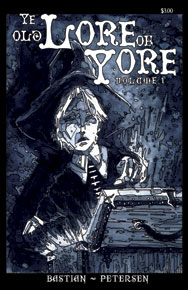 |
'Ye Old Lore of Yore' |
CBNAH: How did you break into the field and were your family supportive of your dreams?
JB: I started going to shows and showing artists my work asking for critiques and that led to spending hours in portfolio review lines in San Diego waiting to get reviewed by editors. I listened to everything they had to say, because my work was never sacred, I knew if I wanted a job in comics I had to improve on so many levels. I had to become as good as any book on the comic stand.
JB: I started going to shows and showing artists my work asking for critiques and that led to spending hours in portfolio review lines in San Diego waiting to get reviewed by editors. I listened to everything they had to say, because my work was never sacred, I knew if I wanted a job in comics I had to improve on so many levels. I had to become as good as any book on the comic stand.
All the while my parents were becoming more and more supportive of my career designs, they could see how focused I was and how determined I was to be better. They drove me to all those first conventions and would even talk with artists asking them tips to help me along. I eventually came up with my own story and self-published it and took it around to different publishers and it found it's way into just the right hands and was picked up and published through Olympian Publishing.
Cursed Pirate Girl was not my first book, the first two books I did were Phantom Corp. and a collaboration project with David Petersen (the creator of Mouse Guard) called 'Ye Ol Lore Of Yore'. As much as I loved Phantom Corp. it just didn't have the grab I thought it would and so I changed tracks. I created something a little more personal but for a broader audience.
CBNAH: What were your favorite memories from the books you did or sketches and conventions you impacted on?
JB: My favorite memories of the book are those little moments like the swordfish bros. or the very dangerous potato or the turkey head in a cart. Places that called for a character and I pushed it to the limits of strange. When it comes to conventions, my favorite memories are meeting my artistic heroes and finding that they like what I do. They even remember my name at the different conventions I set up at and ask me how the work is going. That just floors me every time.
CBNAH: Do you ever see yourself having a lengthy run at one of the big 2 aka Marvel or DC?
JB: No. There's no way. I'm waaaaaaay too slow. Maybe an individual issue, or small story arc that I could work on at my leisure, but nothing that they would need on schedule.
CBNAH: Can you describe your creative process of materializing the visuals from a script?
JB: It starts with the original image that comes into my head when I was writing the script, then I thumbnail it out, and then rough it out at actual size. Sometimes the original size rough comes very easily, usually the first time I draw it, but mostly it takes many tries at getting the character or scene just cool enough.
CBNAH: What were your favorite memories from the books you did or sketches and conventions you impacted on?
JB: My favorite memories of the book are those little moments like the swordfish bros. or the very dangerous potato or the turkey head in a cart. Places that called for a character and I pushed it to the limits of strange. When it comes to conventions, my favorite memories are meeting my artistic heroes and finding that they like what I do. They even remember my name at the different conventions I set up at and ask me how the work is going. That just floors me every time.
CBNAH: Do you ever see yourself having a lengthy run at one of the big 2 aka Marvel or DC?
JB: No. There's no way. I'm waaaaaaay too slow. Maybe an individual issue, or small story arc that I could work on at my leisure, but nothing that they would need on schedule.
CBNAH: Can you describe your creative process of materializing the visuals from a script?
JB: It starts with the original image that comes into my head when I was writing the script, then I thumbnail it out, and then rough it out at actual size. Sometimes the original size rough comes very easily, usually the first time I draw it, but mostly it takes many tries at getting the character or scene just cool enough.
And then other times I'll have to come back the next day and give it a fresh look, sometimes it can be pushed a little more creatively. That's when I have the most fun, when I draw one thing and think to myself- "this could be so much better", and then I keep going until it is.
CBNAH: Some of your artistic influences?
JB: I've already listed a bunch of my comic book artistic influences, I'll just list some others instead of talk about how much they influence me because I love a lot of artists and this article would become way too long. William Hogarth, Hendrik Goltzius, Albrect Durer, Thomas Rowlandson, Walter Crane, H.J. Ford, Aubrey Beardsley, Harry Clarke, Sidney Sime, Heinrick Kley, Kay Nielsen, Arthur Rackham, Edmund Dulac, Gustave Dore, Brian Froud, Yoshitaka Amano, Andrej Dugin, Olga Dugina, Gennady Spirin, Tony DiTerlizzi, Alan Aldridge, Windsor McKay, Vania Zouravliov, K.Y. Craft, James Christensen and Aaron Horkey.
CBNAH: Some of your artistic influences?
JB: I've already listed a bunch of my comic book artistic influences, I'll just list some others instead of talk about how much they influence me because I love a lot of artists and this article would become way too long. William Hogarth, Hendrik Goltzius, Albrect Durer, Thomas Rowlandson, Walter Crane, H.J. Ford, Aubrey Beardsley, Harry Clarke, Sidney Sime, Heinrick Kley, Kay Nielsen, Arthur Rackham, Edmund Dulac, Gustave Dore, Brian Froud, Yoshitaka Amano, Andrej Dugin, Olga Dugina, Gennady Spirin, Tony DiTerlizzi, Alan Aldridge, Windsor McKay, Vania Zouravliov, K.Y. Craft, James Christensen and Aaron Horkey.
 |
'Cursed Pirate Girl' |
CBNAH: How has the CURSED PIRATE GIRL title been treating you as it's quite a fun title?
JB: It was one of those names that is so simple that you read it and think "oh really... so what?", kind of like the Punisher. When I first encountered the Punisher I thought to myself "ooh, he's the Punisher, he punishes people, how intimidating". But the more times you read it or say it it becomes linked to the image of "the Punisher" and all that is associated with him. Guns, knives, skulls, explosions, blood, etc.
I'd like people to imagine wooden sculptures of arcane-looking fish decorated with gold embellishments with little jolly rogers sculpted into them, possibly with barnacles covering some of the wood and cracks running along the side. Like a pinata from the 1800s and when it is opened bones and treasure will fall out, maybe a crab or two as well.
CBNAH: What's the favorite thing about being a sketcher and artist for a living?
JB: Well the question answers itself. You get to sketch for a living. I mean come on, pretty much the only thing better would be to have sex for a living and that isn't something you really share with your parents. :) I get to create really weird things from my imagination and exchange them for money.
CBNAH: Best advice you ever got?
JB: The Iron Fist and All-Star Squadron artist Arvell Jones told me in a comic book workshop to "have fun, get into the character", he said this as he was climbing onto a chair and acting out a fight scene. I'll never forget that.
CBNAH: What's the favorite thing about being a sketcher and artist for a living?
JB: Well the question answers itself. You get to sketch for a living. I mean come on, pretty much the only thing better would be to have sex for a living and that isn't something you really share with your parents. :) I get to create really weird things from my imagination and exchange them for money.
CBNAH: Best advice you ever got?
JB: The Iron Fist and All-Star Squadron artist Arvell Jones told me in a comic book workshop to "have fun, get into the character", he said this as he was climbing onto a chair and acting out a fight scene. I'll never forget that.
The second thing I won't forget was in a Hall H panel starring Quentin Tarantino and Robert Rodriguez about their Grind House collaboration. An audience member asked advice on how to get into the filming biz and at the end of the reply Quentin just blurted out "...or just make a really bad-ass movie". And I've tried to apply that to making a comic, to put all I can into it, to make it as bad-ass as possible.
CBNAH: How has the digital age impacted on comics for you and your work?
JB: Still trying to figure out the best way to do it, unless we can get an app or something that allows one to zoom into the art, it will be quite difficult for a viewer (especially a viewer who is reading comics on their phone) to be able to see all the information I try to pack into each panel. I really created this book so that you wanted it on a shelf.
CBNAH: How has the digital age impacted on comics for you and your work?
JB: Still trying to figure out the best way to do it, unless we can get an app or something that allows one to zoom into the art, it will be quite difficult for a viewer (especially a viewer who is reading comics on their phone) to be able to see all the information I try to pack into each panel. I really created this book so that you wanted it on a shelf.
I'm a little old fashioned I know, but I really like being able to hold a physical book and I like the craftsmanship that goes into making books. I really like different kinds of paper, I like the tactile sensation of turning the page, the smell of old books the whole printing process. I've constructed books using chip board, glue, fabric, and so many other ingredients, it's an art-form in itself.
CBNAH: What would you like to see happen to the industry over the next two years?
JB: I think just to see the audience grow would be good enough. I'm glad to see so many independent books out there. Comics aren't just about capes and cowls, it really is its own art form and I think more people are slowly starting to realize that. They realize it in other countries and I think that is because they don't hold to the paradigm of the super hero. There are beautiful personal stories out there challenging the perception of what this medium is all about.
CBNAH: Do you think Kickstarter is going to change the way that indie comics, music etc are put out? Do you see this as the biggest revolution for creators in some time and are you gonna be delving into it anytime soon?
JB: Yes, I think Kickstarter has changed the game. I have already seen some major names in the industry put up projects on KS and get them backed, it takes out all the middlemen. An artist can fund their project by basically taking pre-orders and not only be able to fill those orders but then be able to afford more product they can take to shows or even try to get them into stores themselves. This is a very exciting time for the indie artist or writer, they can achieve the first victory along the path of becoming a professional in the comic world, getting published.
CBNAH: If you weren't doing art, what would you be doing?
JB: I'd probably have a good stable job with a lot of security and insurance and it would be dull and I'd have to find many hobbies to get me through the weeks of monotonous repetition. Or I'd be a musician.
CBNAH: Dream book you'd like to work on and with whom?
JB: The one book I've always wanted to work on is Swamp Thing, I really love drawing organic things most and I really enjoy how creepy Swamp Thing books can get. My favorite arc from Alan Moore and John Totleben was the underwater vampire story. Soooooo creepy! It was awesome. Another factor is that I don't think my style would benefit many titles. Do you think Neil Gaiman has a Swamp Thing story in him he needs an artist for?
CBNAH: What would you like to see happen to the industry over the next two years?
JB: I think just to see the audience grow would be good enough. I'm glad to see so many independent books out there. Comics aren't just about capes and cowls, it really is its own art form and I think more people are slowly starting to realize that. They realize it in other countries and I think that is because they don't hold to the paradigm of the super hero. There are beautiful personal stories out there challenging the perception of what this medium is all about.
CBNAH: Do you think Kickstarter is going to change the way that indie comics, music etc are put out? Do you see this as the biggest revolution for creators in some time and are you gonna be delving into it anytime soon?
JB: Yes, I think Kickstarter has changed the game. I have already seen some major names in the industry put up projects on KS and get them backed, it takes out all the middlemen. An artist can fund their project by basically taking pre-orders and not only be able to fill those orders but then be able to afford more product they can take to shows or even try to get them into stores themselves. This is a very exciting time for the indie artist or writer, they can achieve the first victory along the path of becoming a professional in the comic world, getting published.
CBNAH: If you weren't doing art, what would you be doing?
JB: I'd probably have a good stable job with a lot of security and insurance and it would be dull and I'd have to find many hobbies to get me through the weeks of monotonous repetition. Or I'd be a musician.
CBNAH: Dream book you'd like to work on and with whom?
JB: The one book I've always wanted to work on is Swamp Thing, I really love drawing organic things most and I really enjoy how creepy Swamp Thing books can get. My favorite arc from Alan Moore and John Totleben was the underwater vampire story. Soooooo creepy! It was awesome. Another factor is that I don't think my style would benefit many titles. Do you think Neil Gaiman has a Swamp Thing story in him he needs an artist for?

CBNAH: Advice for upcoming writers and artists?
JB: If you're upcoming then you're not there yet. Listen to criticism, know that you have to improve, don't take it personal and don't get defensive. If you're really intent on becoming a professional you'll look at your work as constantly "in progress". And until you can pick up a copy of Batman and honestly say to yourself "I'm this good", you'll never work for DC.
CBNAH: LASTLY, finish this - comic book nerds are hot because _______?
JB: They're full of imagination and far from mundane. Normal people suck.
JB: If you're upcoming then you're not there yet. Listen to criticism, know that you have to improve, don't take it personal and don't get defensive. If you're really intent on becoming a professional you'll look at your work as constantly "in progress". And until you can pick up a copy of Batman and honestly say to yourself "I'm this good", you'll never work for DC.
CBNAH: LASTLY, finish this - comic book nerds are hot because _______?
JB: They're full of imagination and far from mundane. Normal people suck.
Subscribe to:
Posts (Atom)